

Lost Canvases Of The 1860’s and The Impressionist Palette
Impressionist Palette of 'The Footbridge’ ©1867
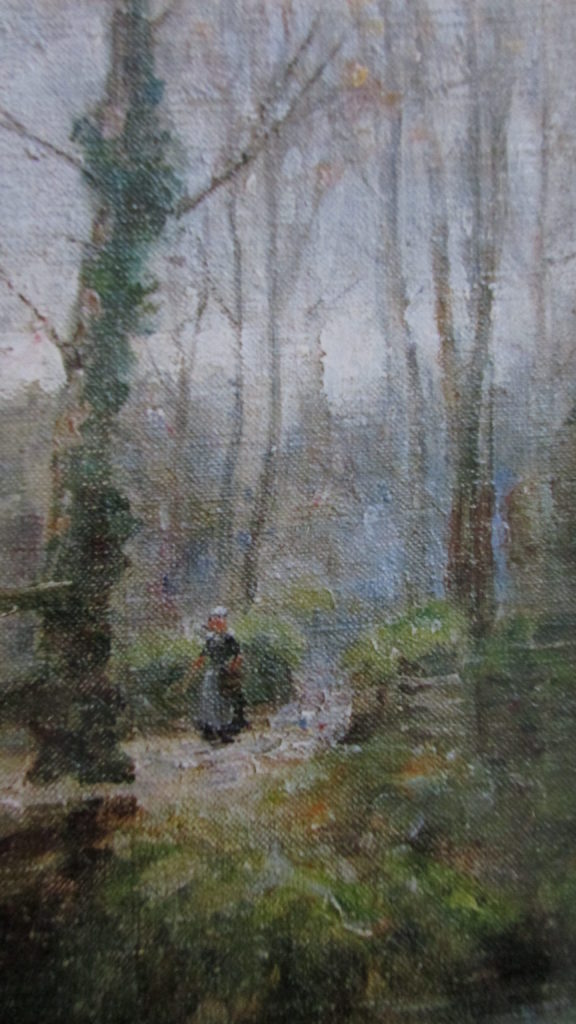
LOST CANVASES
Bougival Period (1867- 1870)
Artistic experimentation and collaboration in plein air painting between Sisley, Camille Pissarro, Claude Monet, Pierre-Auguste Renoir and Frederic Bazille began in the forest of Fontainebleau.
The emergence of the Impressionist Palette and brush-stroke technique are established in the paintings of the Bougival Period. Locations around the western suburbs of Paris. Often referencing the place names – Bougival and Louveciennes.
In this period, Sisley resided at the town of Bougival, Claude Monet at the nearby village of Saint-Michel and Camille Pissarro at 22 Route de Versailles, Louveciennes.
Requisitioning of Studios
Prussian army occupied the town of Bougival and Louveciennes as part of the western encirclement and siege of Paris: Franco-Prussian war 1870-1871.
Requisitioning properties which included the artist’s residences.
Sisley reminiscences to Adolphe Tavernier about ”losing all that I possessed at Bougival during the war and taking refuge in Paris, I returned to the same area, to Louveciennes in 1872” (2).
Pissarro and Monet relocated to London and there are biographical details about the 22 Route de Versailles, Louveciennes.
Hundreds of paintings destroyed, including paintings stored by Monet.